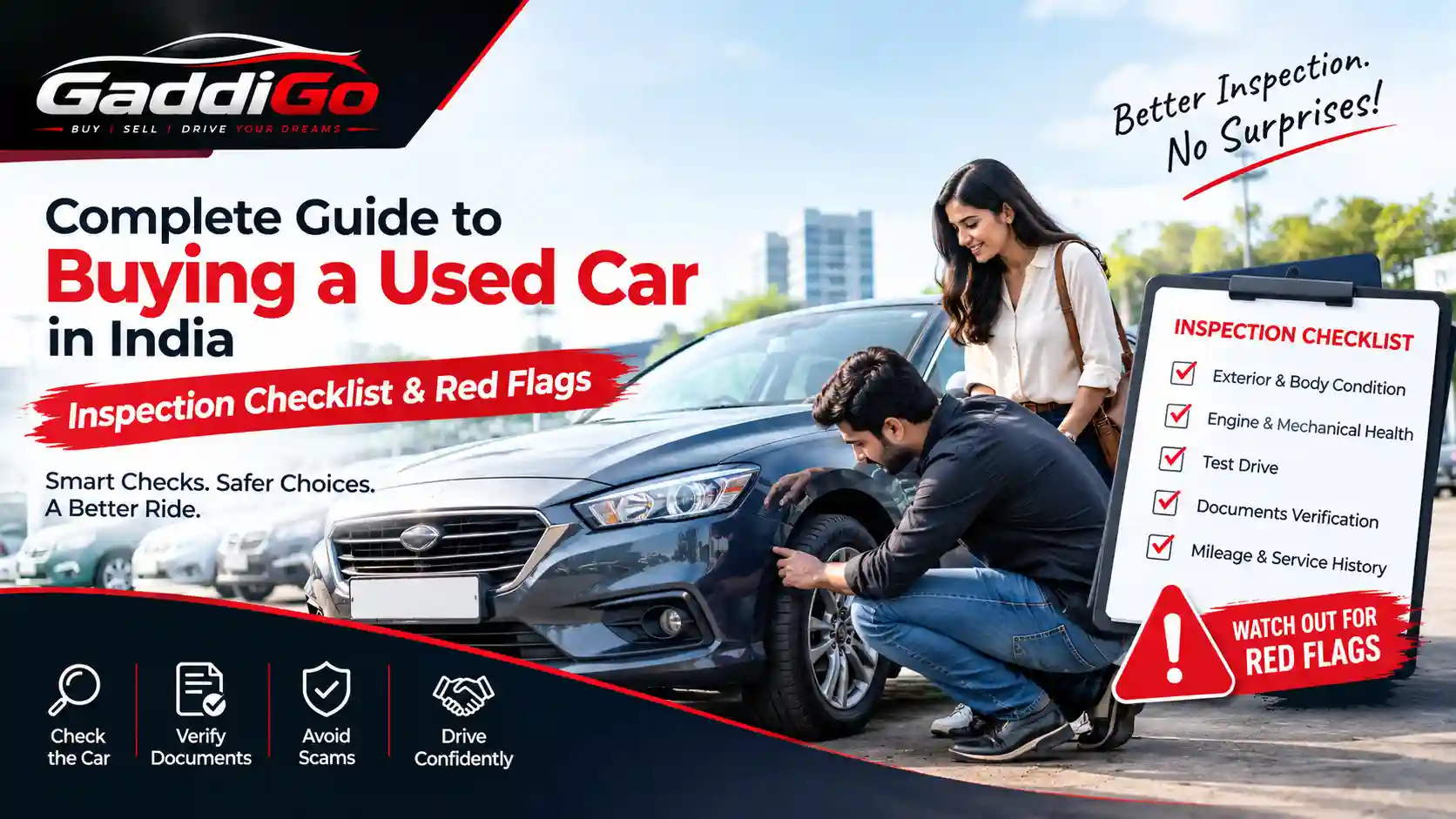
Buying a used car in India can be a smart way to own a vehicle without spending as much as you would on a brand-new model. Whether you need a car for daily commuting, family trips, or weekend travel, the second-hand car market offers plenty of options across different budgets.
However, finding the right car requires more than comparing prices and choosing a model you like. You need to inspect the vehicle, verify its documents, understand its maintenance history, and identify potential warning signs before making a payment.
If you're wondering how to buy a used car in India, this guide covers everything you should check before finalising your purchase.
1. Set Your Budget Before Searching
Start by deciding how much you can comfortably spend on a used car. Remember that the purchase price is only one part of the total cost.
You may also need to budget for:
-
Insurance renewal or policy-related expenses
-
Ownership transfer fees
-
Routine servicing and repairs
-
Tyre or battery replacement
-
Fuel and regular maintenance
-
Parking and other running costs
Keep some money aside for unexpected repairs rather than spending your entire budget on the vehicle itself.
Tip: Compare the total ownership cost of different models, not just their advertised prices.
2. Choose a Car That Matches Your Needs
The best used car depends on how you intend to use it.
If you mainly drive in crowded cities, a compact hatchback may be easier to park and maintain. Families may prefer a spacious hatchback or sedan, while people who frequently travel on highways might prioritise comfort, engine performance, and safety features.
Before shortlisting a model, consider:
-
Number of passengers
-
Daily driving distance
-
Petrol, diesel, CNG, or electric requirements
-
Manual or automatic transmission
-
Availability of service centres
-
Spare-part costs
-
Safety features and vehicle condition
Choosing a practical car can help you avoid unnecessary expenses later.
3. Research the Car's Market Price
Once you've selected a model, compare prices for similar vehicles in your city.
Look at the manufacturing year, variant, kilometres driven, ownership history, service records, and overall condition. A well-maintained car with complete service records may justify a higher price than a similar vehicle with an uncertain history.
Remember that an advertised price is not necessarily the final selling price.
If a car is priced significantly below comparable vehicles, ask why. It could be a genuine bargain, but it could also have mechanical problems, accident damage, outstanding finance, or incomplete paperwork.
4. Check the Exterior and Body Condition
Inspect the vehicle in daylight, preferably when the bodywork is clean and dry.
Look carefully at the following areas:
-
Paintwork: Check for colour differences, overspray, and uneven finishes.
-
Body panels: Look for inconsistent gaps between doors, the bonnet, and the boot.
-
Rust: Inspect the wheel arches, door edges, and accessible underbody areas.
-
Glass: Look for cracks and check whether the windscreen has been replaced.
-
Tyres: Check tread depth and uneven wear.
-
Lights: Test the headlights, indicators, brake lights, and reverse lights.
Uneven panel gaps or paint differences may indicate previous repairs, although they do not automatically prove major accident damage.
If you notice anything suspicious, ask for an explanation and consider getting an independent inspection.
5. Inspect the Engine and Mechanical Components
A car can look attractive on the outside but still have expensive mechanical problems.
If possible, inspect the vehicle when the engine is cold. Listen for unusual noises and check for visible fluid leaks.
Pay attention to:
-
Difficulty starting the engine
-
Excessive smoke from the exhaust
-
Unusual knocking or rattling sounds
-
Warning lights on the dashboard
-
Unusual engine vibrations
-
Signs of oil or coolant leakage
-
Overheating or cooling-system problems
Do not rely only on a short inspection. A qualified mechanic can assess the engine, transmission, suspension, brakes, and other components more thoroughly.
6. Take a Proper Test Drive
A test drive is essential before buying a used car.
Drive the vehicle on different types of roads when possible, including ordinary city roads and a safe stretch where you can assess its performance at higher speeds.
During the drive, check:
-
Whether the engine starts and runs smoothly
-
Whether the clutch feels normal, if applicable
-
Whether gears shift smoothly
-
Whether the steering pulls to one side
-
Whether the brakes respond properly
-
Whether the suspension makes unusual noises
-
Whether the air conditioning works
-
Whether the dashboard displays warning lights
For an automatic car, check that gear changes are smooth and that there are no unusual delays or jerks.
Never ignore a problem simply because the seller promises to fix it later. Get the issue assessed and agree on the repair arrangements before proceeding.
7. Verify the Registration Certificate (RC)
The Registration Certificate is one of the most important documents to check when buying a used car in India.
Confirm that the vehicle details match the actual car, including the registration number, chassis number, engine number where applicable, and registered owner's details.
Also check:
-
Vehicle registration validity
-
Fuel type and vehicle class
-
Hypothecation or loan status
-
Any relevant restrictions or registration issues
-
Whether the seller is the registered owner or authorised to sell the vehicle
You can use the official Parivahan portal to access the relevant vehicle services.
If the seller's identity or ownership details do not match the documents, resolve the discrepancy before paying.
8. Check Insurance and Other Important Documents
Before completing the purchase, ask the seller for the relevant documents.
| Document | What to Check |
|---|---|
| Registration Certificate (RC) | Owner and vehicle details |
| Insurance certificate | Policy validity and coverage details |
| Pollution Under Control (PUC) certificate | Applicable emissions compliance |
| Service records | Maintenance and repair history |
| Loan closure documents | Whether applicable finance obligations are resolved |
| Ownership-transfer forms | Required transfer paperwork |
| Spare keys and manuals | Availability, where applicable |
Also ask about previous accidents, major repairs, flood damage, and recurring mechanical issues.
Verify the insurance details with the insurer and complete the appropriate policy-transfer or new-policy formalities. Don't assume that receiving the keys automatically updates the insurance or registration records.
9. Check the Service History and Odometer
A car's mileage can influence its price, but the odometer reading should never be the only factor in your decision.
Ask for service invoices and maintenance records. Compare the recorded mileage across available service documents and inspection records.
Signs that deserve further investigation include:
-
Excessive wear on the steering wheel, pedals, or seats
-
Inconsistent mileage records
-
Missing service history
-
Unexplained gaps between maintenance visits
-
Condition that appears inconsistent with the displayed kilometres
These signs are not proof of odometer tampering by themselves. A professional inspection and available records can help establish whether the mileage appears credible.
10. Identify Common Used-Car Red Flags
Some warning signs should make you pause before buying.
Red Flag 1: The Seller Refuses an Independent Inspection
A seller who refuses reasonable inspection arrangements may be hiding a problem. Avoid committing to a purchase until you can assess the vehicle properly.
Red Flag 2: The Price Is Unusually Low
A very low price may have a legitimate explanation, but it deserves closer scrutiny. Verify the vehicle's condition, ownership, and paperwork before proceeding.
Red Flag 3: The Documents Don't Match
Differences in registration, chassis details, owner information, or other records must be resolved before the transaction.
Red Flag 4: There Are Signs of Major Accident Damage
Poorly repaired structural damage can affect the vehicle's safety and future reliability. Consider an independent assessment by a qualified professional.
Red Flag 5: The Seller Demands Immediate Payment
Pressure to pay before inspection or document verification is a warning sign. Take the time you need to make an informed decision.
Red Flag 6: The Car Has Signs of Flood Damage
Look for persistent dampness, unusual odours, corrosion in unusual areas, or electrical problems. These signs require professional assessment because flood damage can lead to continuing issues.
Red Flag 7: The Seller Cannot Explain the Car's History
Unclear ownership, unexplained repairs, or inconsistent answers should prompt further checks rather than immediate payment.
11. Check for Outstanding Loans and Challans
Before finalising the deal, verify whether the vehicle has an outstanding loan or a hypothecation entry on its registration records.
If finance is still recorded against the vehicle, understand the lender's requirements and ensure the applicable obligations are resolved through the proper procedure.
You should also check for pending traffic challans and other relevant vehicle-related liabilities through the appropriate official services.
Do not assume that the seller's verbal assurance is sufficient when official records can be checked.
12. Negotiate the Price Based on Evidence
Once you've inspected the car and reviewed its documents, you can negotiate more confidently.
Use comparable listings and the vehicle's actual condition to support your offer. If a mechanic identifies necessary repairs, ask for a written estimate and consider the cost when deciding your maximum price.
Avoid negotiating solely on the basis of the seller's original asking price. Focus on the vehicle's current market value and the expenses you may face after purchase.
If the seller refuses to address a serious concern, walking away may be better than accepting unnecessary financial risk.
13. Complete the Ownership Transfer Properly
After agreeing on the price, ensure that the ownership-transfer process is completed according to the applicable transport authority requirements.
The transaction generally involves the required transfer forms, vehicle documents, applicable fees, and any additional formalities relevant to the car's circumstances.
Keep proof of payment and signed transaction documents. Track the application until the registration details are updated in your name.
If the car is registered in another state or has an outstanding loan, additional procedures may apply. Confirm the requirements with the relevant RTO before completing the purchase.
Used Car Inspection Checklist
Use this checklist when inspecting a vehicle before buying it.
-
Compare the asking price with similar cars.
-
Inspect paintwork, body panels, rust, and glass.
-
Check tyres, brakes, and suspension.
-
Look for visible engine leaks and unusual noises.
-
Test the clutch, gearbox, steering, and air conditioning.
-
Take a proper test drive.
-
Verify the RC and seller's identity.
-
Review insurance, PUC, and service records.
-
Check loan status and relevant challans.
-
Arrange an independent mechanic inspection.
-
Confirm the final price and payment method.
-
Complete the ownership-transfer formalities.
Final Thoughts
Buying a used car in India can be a practical and affordable decision when you take the time to check the vehicle properly.
Research the market price, inspect the mechanical condition, verify the documents, and look for warning signs before making a payment. A professional inspection can be particularly valuable when you're unsure about the car's history or condition.
The most important rule is simple: never let an attractive price or an urgent sales pitch replace proper verification.
A well-maintained car with a clear history, valid documentation, and a fair price can offer excellent value. By following this inspection checklist, you can make a more informed decision and reduce the risk of unpleasant surprises after the purchase.