Selling your used car in India can feel complicated when you have to find buyers, negotiate prices, arrange inspections, and complete ownership-transfer paperwork. Many car owners want a simpler way to connect with interested buyers and dealers without spending weeks managing enquiries.
A dealer network can help make the process more organised by connecting car sellers with businesses interested in purchasing used vehicles. With the right preparation, you can compare offers, understand your car's market value, and make a more informed selling decision.
If you are searching for how to sell my car in India, this step-by-step guide explains how to prepare your vehicle, approach a dealer network through GaddiGo, evaluate offers, and complete the transaction safely.
Why Consider a Dealer Network When Selling Your Car?
Selling privately means finding individual buyers, answering enquiries, arranging test drives, and negotiating with each interested person. A dealer-network approach offers another option: connecting with dealers who may be interested in your vehicle for resale or their existing inventory.
Potential benefits include:
-
More selling opportunities: You may be able to reach dealers who are actively looking for vehicles.
-
Market-based offers: Comparing multiple offers can help you understand what buyers are willing to pay.
-
Convenience: Interested dealers may be familiar with vehicle inspections and standard transaction procedures.
-
Faster decision-making: A clear process can reduce the time spent handling unsuitable enquiries.
-
Professional communication: Dealers may be experienced in evaluating vehicle condition, paperwork, and resale demand.
These benefits are not guaranteed. Dealer participation, availability, offers, and service arrangements depend on the platform and the individual dealer.
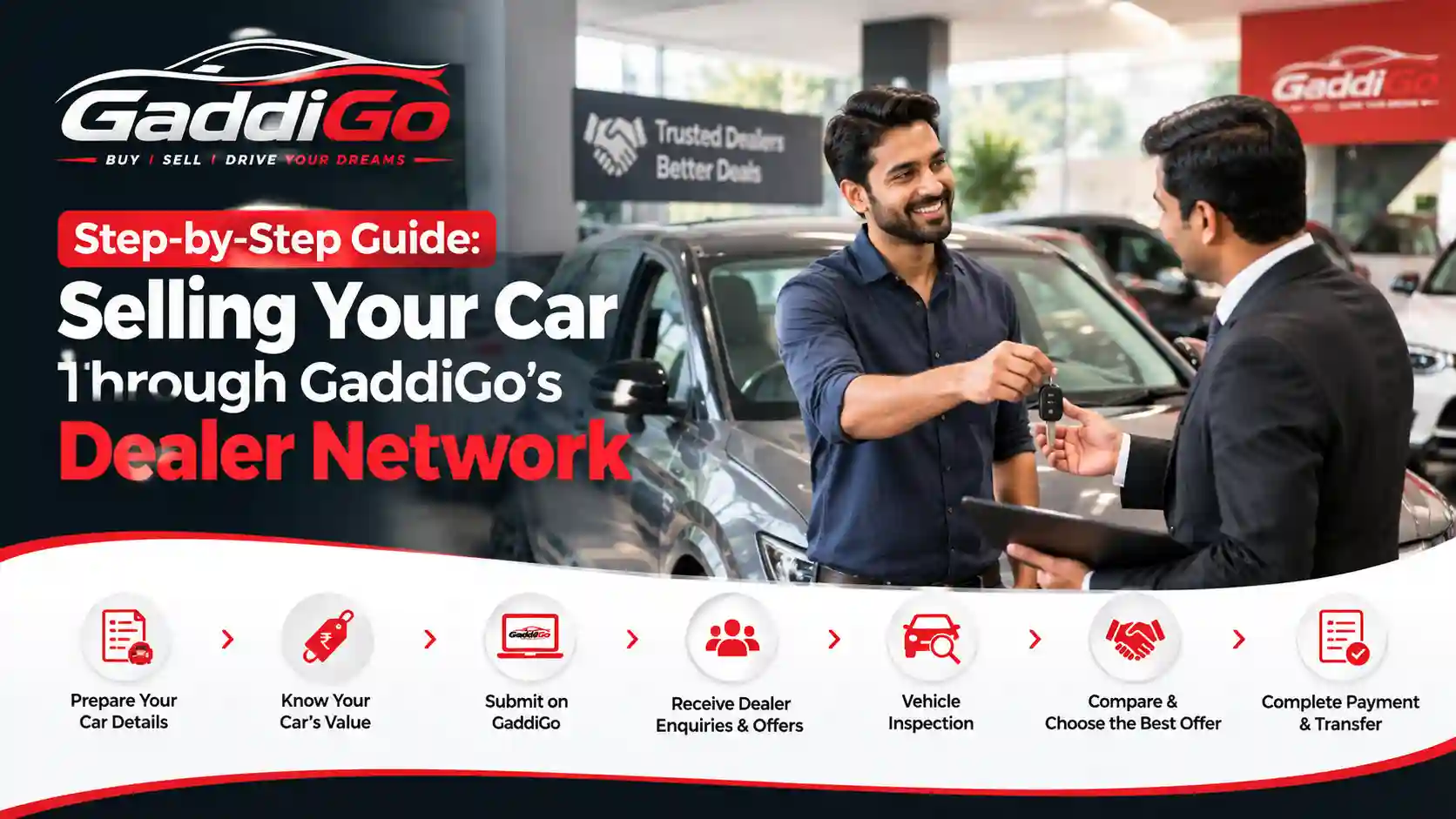
Step 1: Gather Your Car's Details
Before starting the selling process, collect accurate information about your vehicle. Dealers need these details to assess whether the car matches their inventory requirements.
Prepare the following information:
-
Car brand and model
-
Exact variant
-
Manufacturing year and registration year
-
Fuel type and transmission
-
Kilometres driven
-
Number of previous owners
-
Registration location
-
Current insurance status
-
Service history and known repairs
-
Overall exterior and interior condition
Provide honest details about accident history, major repairs, warning lights, and other known issues. Accurate information helps reduce misunderstandings during inspection and negotiation.
Step 2: Estimate Your Car's Resale Value
Understanding your car's market value is an important part of selling it confidently.
Used car prices depend on the vehicle's age, model, mileage, maintenance history, condition, ownership, and local demand. The same model can receive different offers depending on its variant and condition.
Before approaching dealers, compare similar vehicles listed in your city and use an online valuation estimate as a starting point.
For example, if comparable cars are advertised for around ₹4 lakh to ₹4.5 lakh, you can investigate whether those vehicles have similar mileage, ownership history, and condition to yours. Their asking prices are only reference points, not proof of completed sale prices.
A realistic estimate helps you assess dealer offers without setting an arbitrary price.
Step 3: Explore GaddiGo and Check the Available Selling Process
Visit GaddiGo's website to explore its available car-related services and selling options.
If a dealer-network selling or enquiry option is available, follow the instructions provided on the website. Depending on the current process, you may be asked to submit vehicle information and contact details so your enquiry can be reviewed.
Before submitting information, check:
-
What vehicle details are required
-
Whether the service involves dealer enquiries or a direct sale
-
Whether any listing or transaction fees apply
-
How your contact details may be used
-
How you will receive and compare offers
-
What inspection or verification steps may be required
Do not assume that submitting your details guarantees a buyer, a specific price, or an immediate sale. Review the platform's current terms and process before proceeding.
Step 4: Provide Clear Photographs and Accurate Information
Good photographs help potential buyers understand your car's condition before arranging an inspection.
Take clear pictures of:
-
Front and rear views
-
Both sides of the vehicle
-
Seats and dashboard
-
Odometer reading
-
Boot and storage area
-
Wheels and tyres
-
Visible scratches, dents, or other damage
Photograph the car in good lighting and use a clean background where possible. Avoid filters or editing that could misrepresent its condition.
Accurate photographs and descriptions can help establish trust and reduce avoidable disagreements during inspection.
Step 5: Respond to Dealer Enquiries
Once you receive an enquiry or offer through the available selling process, communicate clearly with the interested dealer.
Be ready to answer questions about the car's mileage, maintenance, ownership, insurance, accident history, and any outstanding loan.
You can also ask the dealer:
-
What information is needed before making an offer?
-
Is the initial offer subject to physical inspection?
-
Which documents must be provided?
-
Are any deductions or fees applicable?
-
What payment methods and timelines are offered?
-
Who will handle the ownership-transfer paperwork?
Keep a written record of important communications and the terms discussed. Avoid making commitments until you understand the complete transaction process.
Step 6: Arrange a Vehicle Inspection
A dealer may want to inspect your car before confirming a final price. This helps assess its mechanical condition, bodywork, interior, tyres, and other relevant factors.
Before the inspection:
-
Clean the vehicle.
-
Keep available service records and repair invoices ready.
-
Ensure the car is accessible for inspection.
-
Explain any known defects or previous repairs.
-
Ask the inspector to explain significant deductions from the initial estimate.
The final offer may differ from an online estimate or preliminary quote because the inspection provides additional information about the car's condition.
Do not feel pressured to accept an offer immediately. If the amount seems unreasonable, compare it with other available offers and the condition of similar vehicles.
Step 7: Compare Offers Before Accepting One
Receiving an offer is only one part of selling your car. You should evaluate the overall deal before making a decision.
Compare offers based on:
| Factor | What to check |
|---|---|
| Final price | The actual amount you will receive |
| Inspection deductions | Reasons for any reduction from the initial quote |
| Payment | Method, timing, and confirmation process |
| Fees | Any applicable service or transaction charges |
| Paperwork | Who prepares and submits the required documents |
| Convenience | Inspection arrangements and vehicle handover |
| Transparency | Whether all terms are clearly documented |
A dealer offering the highest initial price may not necessarily provide the best final deal if substantial deductions or unclear conditions apply.
Choose an offer that suits your needs and provides clear payment and documentation terms.
Step 8: Prepare the Required Documents
Having the relevant documents ready can help prevent unnecessary delays.
Commonly relevant documents include:
-
Registration Certificate (RC)
-
Valid insurance details
-
Pollution Under Control (PUC) certificate, where applicable
-
Service and maintenance records
-
Loan-closure documents and financier's No Objection Certificate (NOC), if applicable
-
Required ownership-transfer forms and supporting documents
The exact requirements depend on the transaction and applicable transport rules. Verify the current procedure with the relevant Regional Transport Office (RTO) or official transport portal.
If the vehicle has an outstanding loan, contact your lender to understand the settlement and hypothecation-removal process before completing the sale.
Step 9: Verify Payment Before Handing Over the Car
Payment safety is essential when selling a vehicle.
Before handing over the keys, verify that the agreed amount has been received in your bank account through your bank's official channel. Do not rely only on a screenshot, SMS, email, or payment confirmation shown by the buyer.
Follow these precautions:
-
Confirm the buyer or dealer's identity.
-
Document the agreed price and payment terms.
-
Avoid sharing banking passwords, OTPs, or UPI PINs.
-
Do not pay unexpected fees to receive money.
-
Keep copies of receipts and signed transaction documents.
-
Record the vehicle handover details.
If payment is being made in stages or through a loan-related arrangement, ensure the process is clearly documented and that you understand when the funds will be available.
Step 10: Complete Ownership Transfer and Handover
The sale is not fully complete simply because the buyer has collected the car.
Follow the applicable ownership-transfer procedure and submit the required documents through the appropriate RTO or official transport system. Keep proof of submission and follow up until the transfer is completed.
Document the handover, including the date, vehicle details, agreed sale amount, payment status, and documents provided.
Also remember to remove personal belongings, clear saved addresses and paired phones from the infotainment system, and follow the manufacturer's instructions for transferring or removing connected-car accounts.
Completing these steps helps protect your interests after the vehicle leaves your possession.
Tips to Sell Your Car Successfully Through a Dealer Network
Keep these practical tips in mind when selling your car:
Research the market first. Know the approximate resale value before discussing prices.
Keep your vehicle presentable. A clean car with organised service records is easier for potential buyers to evaluate.
Be transparent. Disclose known issues rather than risking disputes during inspection.
Compare offers. Consider the final amount, fees, payment conditions, and paperwork support.
Read the terms. Understand how the platform works and whether any charges apply before proceeding.
Prioritise safety. Verify payment and follow the official transfer process.
Avoid unrealistic promises. Be cautious of anyone guaranteeing an unusually high price without inspecting the vehicle or explaining the conditions.
Frequently Asked Questions
1. How can I sell my car in India?
Start by estimating your car's market value, preparing the vehicle details and documents, and comparing potential buyers or dealer offers. You can explore GaddiGo to check its available car-selling options and follow the process described on the website.
2. Can I sell my used car through a dealer network?
A dealer network may connect sellers with interested dealers, depending on the platform's services. Check the current options, participation requirements, and transaction terms before submitting your vehicle details.
3. Will I get the same price as an online valuation?
Not necessarily. Online valuations are estimates based on available data. A dealer's final offer may change after a physical inspection, document verification, and assessment of local resale demand.
4. What documents do I need to sell my car?
Commonly relevant documents include the RC, insurance details, applicable PUC certificate, and ownership-transfer documents. If the vehicle is financed, additional loan-closure and lender documents may be required. Confirm the exact requirements with the relevant authority.
5. How long does it take to sell a used car?
The time varies according to the vehicle's price, condition, demand, buyer availability, inspection requirements, and paperwork. A well-prepared listing and prompt communication may help, but no specific sale timeline can be guaranteed.
6. Is it safe to sell a car through a dealer?
Selling through a dealer can be convenient, but you should still verify the dealer's identity, understand the terms, confirm payment, document the handover, and complete the official ownership-transfer process.
Conclusion
Selling your car through a dealer network can be an alternative to finding an individual buyer yourself. The key is to understand your car's value, provide accurate information, compare offers, and verify the payment and paperwork before handing over the vehicle.
If you are researching how to sell your car in India, start by exploring GaddiGo and checking the selling options currently available. Prepare your vehicle details, ask questions about the process, and evaluate every offer carefully.
A well-informed decision can help you approach the sale with greater confidence and work towards a fair, transparent transaction.
Disclaimer: This article is for general informational purposes. GaddiGo's exact dealer-network features, availability, fees, and selling process should be confirmed directly on its website. Offers and sale timelines are not guaranteed. Vehicle-transfer requirements may vary by transaction and state.